
Every grade consistent. Every skill measured.
Evidence-based training and assessment for airline recurrent pilot training. Grading, training planning, analytics and records in one system, built on the ICAO, IATA and EASA method. Select a module.
Every check graded against the nine ICAO/IATA pilot competencies, with all 73 observable behaviours in IATA's own wording and numbering. Each exercise is mapped to the competencies it mainly tests and those it supports.
Rebuilt from your own forms at onboarding: items, grading scale per section, attempts, TEM-applicable items and competency mapping. Printed in the layout of your own paper form.
The next session is built from what the last check found. The recurrent programme is planned as cycles, modules and two-day sessions, each with an assigned instructor.
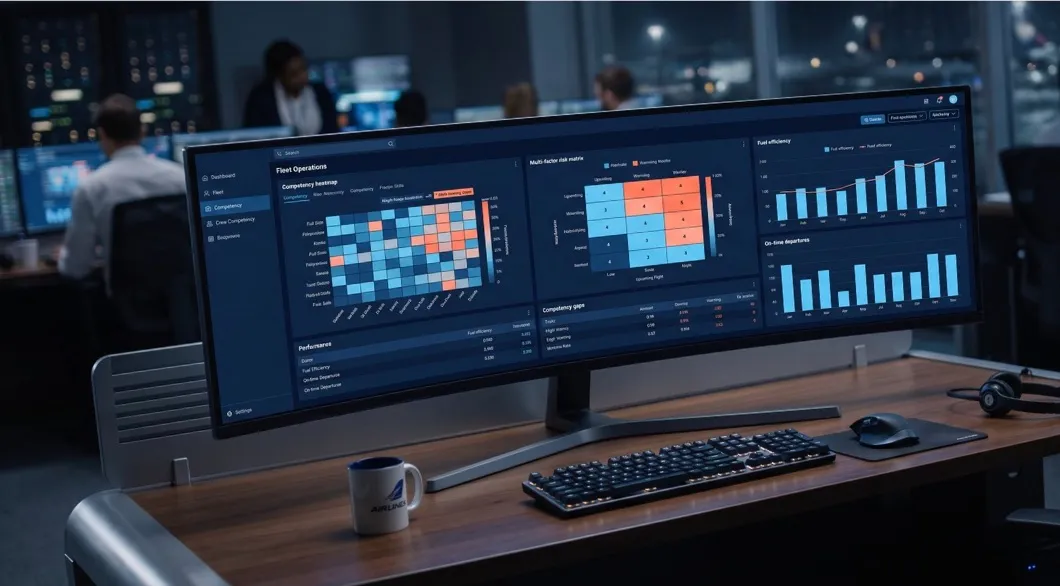
Evaluate the pilot, analyse the cohort, monitor the fleet. Macro analysis separates one pilot struggling from a whole class weak on the same competency.
Each instructor's average grade, updated with every submission and compared with the fleet mean, so standards stay consistent. Trainees rate each session through a short link, no login.
Submitting a form calculates the grades, generates a signed PDF, adds a permanent record and feeds live analytics at once. Every edit after submission is logged.
Each airline sets its own stage, with a start date, and moves up on the same platform: same records, same pilots, same history. Each check is graded under the stage in force on its date.
Every pilot current. Every renewal planned.
The training management system. Validity, planning, recurrent training, records and audit in one place, configured to the airline's Operations Manual and authority. Select a module.
Every licence, medical, check and course is scored against the airline's own rule. A pilot's overall status is their worst item, so one lapsed check flags the whole file.
Validity periods, renewal windows and expiry counting are configured to the airline's OM-D and national authority. The new expiry is suggested from the rule and reviewed before saving.
Every renewal is placed by expiry and lead time, with the reason shown for each month. Open next month's load, see the pilots due, book the simulator group.
Phases, base-month groups and checklists built from the airline's recurrent programme. A passed check or course writes the completion and the new expiry to the pilot's record.
One digital file per pilot, ready for the inspector at any time. Crew-system imports are reconciled against training records, so gaps are found before the auditor finds them.
Monthly, quarterly and yearly reports for the Director, by fleet and activity. Targets are set by the airline's training department.
Pilots see their own licence, medical, ratings, qualifications and upcoming training. Automatic messages close the loop, and the office stops chasing dates.
How they work together.
For airlines that take both, the products share one crew list, one pilot record and one login. Follow one pilot's proficiency check through both: every step writes to the same record, so nothing is typed twice.
The expiry engine sees the operator proficiency check falls due inside the planning window. The pilot is placed in the November simulator group and emailed the assignment, with a reminder before the session.
The instructor grades the session on the airline's own simulator check form. AeroStrat recommends each competency grade by the IATA lowest-of-three rule; the instructor sets the final grade and signs.
The completed, graded session updates the TMS record with no re-typing. The expiry engine recalculates the check from its rule (6 calendar months, end of month) and the plan drops the pilot from November.
Validity and competence for the same pilot, fleet and period, side by side. Board-ready reports and an audit pack are one click away.
What is shared, and who writes it.
Both products read and write the same records. Tap a record type to see where its data comes from and where it goes.
One crew list, imported from the crew system and matched to every training record. Imports are reconciled, so gaps are found before the auditor finds them.
Every airline's data is isolated from every other's. Pilot and cabin-crew records are kept separate at the database level, and the data stays yours, exportable in full at any time.
One platform. Every role.
Each user sees and changes only what their role allows, in both products, with one login. Every action is logged.
Four stages, about five weeks.
Target timeline from receiving your manual, records and forms. You name one owner; we do the setup. Tap a stage.
You own the programme. We make it workable.
The airline keeps every regulatory obligation and the instructor sets every final grade; AeroStrat never overwrites it. Authorities approve programmes, not software.
Frequently asked questions.
What Training Directors ask before choosing one product, or both.
Can we start with one product?
Yes. Take AeroStrat TMS, AeroStrat EBT/CBTA, or both. Each runs on its own. Together they share one crew list, one login and one pilot record, so a graded check updates the next expiry with no re-typing.
We already use another platform.
AeroStrat moves you across. Your forms are digitised, and your past grades and training records are moved into the new system. The migration is done by AeroStrat.
Do we have to change our forms?
No. If you have a training manual but no digital forms, AeroStrat builds the forms from your manual, rule for rule. If you already have forms you want to keep, AeroStrat implements those exactly: same structure, same scoring logic, same sign-off chain, so instructors see what they already know, digitised.
Will our pilots accept it?
Results are framed as coaching, not discipline. The instructor sets every grade and AeroStrat never overwrites it. Pilots also see their own status in the portal instead of asking the office.
What happens to our data?
It stays yours: isolated from every other airline and exportable in full at any time. Pilot and cabin-crew records are held separately at the database level rather than hidden in the interface, so a security review or an auditor gets a verifiable answer about isolation.
Does it replace our LMS or rostering?
No. AeroStrat works alongside both. Rostering stays where it is, and AeroStrat does not deliver e-learning. Connecting the TMS to an existing LMS is on the roadmap: where the LMS supports module export, its learning modules can be embedded in the TMS.
Is the software approved by the authority?
Authorities approve programmes, not software. AeroStrat supports your compliance with EASA and your national rules, and the airline keeps every regulatory obligation.
How long does implementation take?
Four stages, about five weeks, from receiving your manual, records and forms. You name one owner; AeroStrat does the setup.
Three steps. One decision.
Agree a pilot project: one fleet, the products you need, and success measures set in advance. Then share your manuals, records and forms, and go live.
A 30-minute walkthrough on a sample of your own crew, records and check forms. We reply within one business day.